What does it mean when a baby lotion is labeled as USDA organic?
Picked for this question
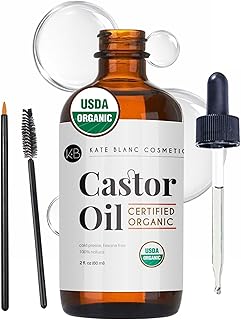
Organic castor oil
Kate Blanc Cosmetics · USDA Organic · Ingredient list: pure cold pressed hexane-free organic castor oil · 118,205 Amazon ratings
This organic castor oil has 118,205 Amazon ratings and carries the USDA Organic certification.
Check price
Organic nipple cream
Earth Mama · USDA Organic · Ingredient list: 6 items, all published · 65,080 Amazon ratings
This organic nipple cream has 65,080 Amazon ratings and is certified USDA Organic.
Check price
PURA D'OR USDA ORGANIC Moroccan Argan Oil Pure Cold-Pressed
PURA D'OR · USDA Organic · Ingredient list: argania spinosa (argan) kernel oil · 31,035 Amazon ratings
This organic Moroccan Argan oil has 31,035 Amazon ratings and is certified USDA Organic.
Check priceAs an Amazon Associate, Bloom earns from qualifying purchases.
The USDA Organic seal indicates that a product meets federal standards for agricultural sourcing and processing [1]. When you see this label on a baby lotion, it confirms that the ingredients were farmed and handled according to specific Department of Agriculture requirements [1][2]. Consult your paediatrician if you have questions about specific ingredients for your child.
This page explains labels and certifications. Not medical advice; ask your paediatrician.
What the USDA Organic Seal Means
The USDA Organic seal is a federal designation managed by the National Organic Program [2]. It focuses on how crops are farmed, how ingredients are processed, and the types of substances used during production [1]. When a product carries this seal, it signifies that the manufacturer has followed strict standards regarding the agricultural supply chain [3].
Bloom lists a product only when it has at least 1,000 Amazon ratings, its full ingredient or material list is published, it has no synthetic red flags, food and drinks are organic by nature, and fabrics carry a named organic certification; personal care, baby care, supplements and household products are held to a clean-formula standard instead of an organic one. Nobody pays to be listed.
Labeling Rules for Personal Care
The USDA Organic seal may only be used on products that meet specific organic ingredient thresholds [4]. For many items, this means the product must contain at least 95 percent organic ingredients [5][1]. If a label uses the phrase "made with organic" ingredients, it typically indicates that at least 70 percent of the ingredients are certified organic [4][1].
It is helpful to remember that "organic" refers to the agricultural origin of the ingredients rather than the final performance of the product. Manufacturers must adhere to these rules to use the seal, which provides a consistent way to identify products that prioritize organic farming practices [1].
Checking Labels and Ingredients
When you are shopping for baby products, look closely at the full ingredient list rather than relying solely on front-of-package claims [2]. Terms like "natural" or "clean" do not have a legal definition, so they do not guarantee that a product meets any specific standard [6][3].
Verifiable certifications like USDA Organic provide a clear benchmark for how ingredients were sourced [3]. By reading the back of the bottle, you can see exactly which components are organic and which are not. This transparency allows you to compare different products based on their actual composition.
What the Certification Does Not Tell You
While the USDA Organic seal confirms adherence to agricultural standards, it does not provide information about how a product performs on the skin [5]. The certification process is designed to oversee the supply chain and farming methods, not to evaluate the suitability of a formula for a specific individual [1][3].
Some products may be formulated with organic ingredients but still contain other components that you might want to review. Always check the full list of ingredients to ensure the product aligns with your personal preferences for your family's routine.
Comparing Different Products
To compare two baby lotions, start by checking the ingredient list for commonalities and differences. If one product is USDA Certified Organic and another is not, the organic certification indicates that the majority of the ingredients were grown according to federal organic standards [1][3].
Consider the full list of ingredients to see if the formula contains additives or preservatives that you prefer to avoid. Since Bloom verifies products based on a clean-formula standard for baby care, you can use the published ingredient lists to make informed decisions that fit your family's needs.
Quick answers
Does organic mean a product is better?
The USDA Organic label indicates that ingredients meet specific agricultural standards, but it does not necessarily mean the product is better for your needs or provides specific benefits [5].
On Bloom’s verified list
Organic castor oil
Kate Blanc Cosmetics
- ✓ 118,205 Amazon ratings
- ✓ USDA Organic
- ✓ Ingredients: Castor Oil
This organic castor oil has 118,205 Amazon ratings and carries the USDA Organic certification.
Organic nipple cream
Earth Mama
- ✓ 65,080 Amazon ratings
- ✓ USDA Organic, Non-GMO Project Verified
- ✓ Ingredients: Organic Olive Fruit Oil, Organic Beeswax, Organic Cocoa Seed Butter, Organic Shea Butter, Organic Mango Seed Butter, Organic Calendula Flower Extract
This organic nipple cream has 65,080 Amazon ratings and is certified USDA Organic.
PURA D'OR USDA ORGANIC Moroccan Argan Oil Pure Cold-Pressed Hair & Skin 4oz
PURA D'OR
- ✓ 31,035 Amazon ratings
- ✓ USDA Organic
- ✓ Ingredients: Argania Spinosa (Argan) Kernel Oil
This organic Moroccan Argan oil has 31,035 Amazon ratings and is certified USDA Organic.
As an Amazon Associate, Bloom earns from qualifying purchases. Facts above come from Bloom’s ledger; check the label on your pack.
How Bloom checks a product
Bloom lists a product only when it has at least 1,000 Amazon ratings, its full ingredient or material list is published, it has no synthetic red flags, food and drinks are organic by nature, and fabrics carry a named organic certification; personal care, baby care, supplements and household products are held to a clean-formula standard instead of an organic one. Nobody pays to be listed.
Sources
- USDA Organic - Consumer Reports consumerreports.org
- Natural and organic baby products: Wipes, lotions, bath, and more medicalnewstoday.com
- Best Non-Toxic Baby Lotion (2026) — Vetted & Ingredient-Checked — Nontoxic Nook nontoxicnook.com
- ORGANIC MARKET REPORT ota.com
- Best Organic Baby Formulas From Our Tests - Consumer Reports consumerreports.org
- Non-Toxic Baby Lotion Guide (And Ones to Avoid) newmodernmom.com
Bloom explains labels, ingredients and certifications. Not medical advice; ask your paediatrician.