How can I identify petroleum-based ingredients on a baby lotion label?
To identify petroleum-based ingredients on a baby lotion, look for terms like mineral oil, petrolatum, and paraffin on the ingredient list [1]. These ingredients are often listed by their common names on the outer packaging [2]. Always read the full ingredient list and consult your paediatrician if you have questions about what touches a child's body.
Bloom’s picks for this

Nipple butter
Earth Mama · USDA Organic · Ingredient list: 6 items, all published · 65,080 Amazon ratings
This nipple butter is USDA Organic and Non-GMO Project Verified, containing only organic plant oils and beeswax.
Check priceIngredients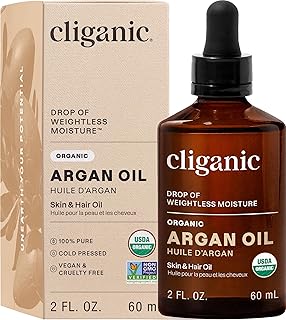
Argan oil
Cliganic · USDA Organic · Ingredient list: argania spinosa (argan) kernel oil · 36,850 Amazon ratings
This argan oil is USDA Organic and Non-GMO Project Verified, consisting of 100 percent organic argan oil.
Check priceIngredients
Jojoba oil
Yoken · USDA Organic · Ingredient list: 100% pure & natural jojoba oil · 8,807 Amazon ratings
No fragrance: the ingredient list is jojoba oil.
Check priceIngredientsAs an Amazon Associate, Bloom earns from qualifying purchases.
This page explains labels and certifications. Not medical advice; ask your paediatrician.
Understanding Ingredient Labels
Bloom lists a product only when it has at least 1,000 Amazon ratings, its full ingredient or material list is published, it has no synthetic red flags, food and drinks are organic by nature, and fabrics carry a named organic certification; personal care, baby care, supplements and household products are held to a clean-formula standard instead of an organic one. Nobody pays to be listed.
In Canada, the International Nomenclature of Cosmetic Ingredients system requires that all product components be displayed on the outer packaging [2]. This method utilizes consistent Latin-based terminology to provide transparency [2]. Components are organized from the largest amount to the smallest amount by weight [2].
- Check the outer packaging for the full list.
- Look for names like mineral oil, petrolatum, or paraffin [1].
- Verify the order of ingredients by concentration [2].
What Labels Tell You
Labels provide information about what is in a product, but they do not always explain the origin of every substance. While some terms are clear, others like fragrance act as umbrella terms for many different components [3]. It is helpful to look for products that disclose all ingredients rather than using catchall terms [3].
When you see a certification on a product, it indicates that the item has met specific standards set by a third party. However, these certifications do not tell you everything about a product's potential effects on your skin or health. Always consider the full ingredient list alongside any labels or claims.
- Avoid catchall terms like fragrance or parfum [3].
- Check for specific ingredient names instead of marketing claims [2].
- Review the full list to understand what you are using.
Comparing Different Products
When comparing two lotions, place their ingredient lists side by side. Look for the presence of plant-derived ingredients versus synthetic ones [1]. Some brands may use naturally derived ingredients, while others rely on more synthetic alternatives [1].
Remember that the absence of a specific ingredient in one product does not automatically make it better than another. Focus on the entire list of ingredients to see which product aligns with your preferences. If you are unsure about how a particular ingredient might interact with skin, ask your paediatrician for guidance.
- Compare the first five ingredients listed [2].
- Identify if the product uses plant-based oils [1].
- Check for the presence of mineral oil or petrolatum [1].
What the Label Does Not Tell You
While ingredient lists provide the names of substances used in a product, they do not always reveal the full history of those components. For instance, ingredients like mineral oil, petrolatum, and paraffin may be present in a lotion, but the label cannot tell you if these specific batches contain contaminants [1]. This means that even when a product lists these ingredients, the potential for hidden substances remains impossible to verify just by reading the packaging [1].
Furthermore, labels often use umbrella terms that obscure specific details. A term like fragrance on a label acts as a catchall that could represent over 100 different individual ingredients [3]. Because manufacturers are not required to list every component under that single heading, you cannot know exactly what is included in the scent profile of the product [3]. Relying solely on the provided list may leave you unaware of the specific substances grouped under these broad, non-specific terms [3].
Where to Find and How to Compare Labels
To find the ingredient list, look at the outer packaging of the product. Regulations require that this information be legible and clearly visible to you at the time of purchase [2]. If the product is sold in a container, the list must appear on the outer label or the single label provided [2]. In some cases, if the list is behind a peel-back label, the top portion must clearly indicate that the ingredients are located there for your review [2].
When comparing two different products, check the order of the ingredients, as they must be listed in descending order of concentration by weight [2]. You can perform a side-by-side comparison to see if one brand relies more on synthetic ingredients while another uses naturally derived ones [1]. By looking at the full list rather than just marketing claims, you can better understand the composition of the product and identify if it contains substances you prefer to avoid [2][1].
Quick answers
Are all ingredients on a label regulated?
While authorities like Health Canada review ingredients to manage risks, they do not require pre-approval for every cosmetic ingredient before it reaches the market [4][5].
Why do ingredient names vary?
Ingredient names can vary because manufacturers may use different naming conventions, though the INCI system is the standard for cosmetic labeling [2][3].
On Bloom’s verified list
Nipple butter
Earth Mama
- ✓ 65,080 Amazon ratings
- ✓ USDA Organic, Non-GMO Project Verified
- ✓ Ingredients: Organic Olive Fruit Oil, Organic Beeswax, Organic Cocoa Seed Butter, Organic Shea Butter, Organic Mango Seed Butter, Organic Calendula Flower Extract
This nipple butter is USDA Organic and Non-GMO Project Verified, containing only organic plant oils and beeswax.
Argan oil
Cliganic
- ✓ 36,850 Amazon ratings
- ✓ USDA Organic, Non-GMO Project Verified
- ✓ Ingredients: Organic Argan Oil (Argania Spinosa)
This argan oil is USDA Organic and Non-GMO Project Verified, consisting of 100 percent organic argan oil.
As an Amazon Associate, Bloom earns from qualifying purchases. Facts above come from Bloom’s ledger; check the label on your pack.
How Bloom checks a product
Bloom lists a product only when it has at least 1,000 Amazon ratings, its full ingredient or material list is published, it has no synthetic red flags, food and drinks are organic by nature, and fabrics carry a named organic certification; personal care, baby care, supplements and household products are held to a clean-formula standard instead of an organic one. Nobody pays to be listed.
Sources
- How to Choose a Baby Lotion Without Harmful Chemicals - Consumer Reports consumerreports.org
- Industry Guide for the labelling of cosmetics - Canada.ca canada.ca
- How to Choose Baby Wipes Without Harmful Chemicals - Consumer Reports consumerreports.org
- Safety of Cosmetic Ingredients - Canada.ca canada.ca
- Small Businesses & Homemade Cosmetics: Fact Sheet | FDA fda.gov
Bloom explains labels, ingredients and certifications. Not medical advice; ask your paediatrician.